The short answer
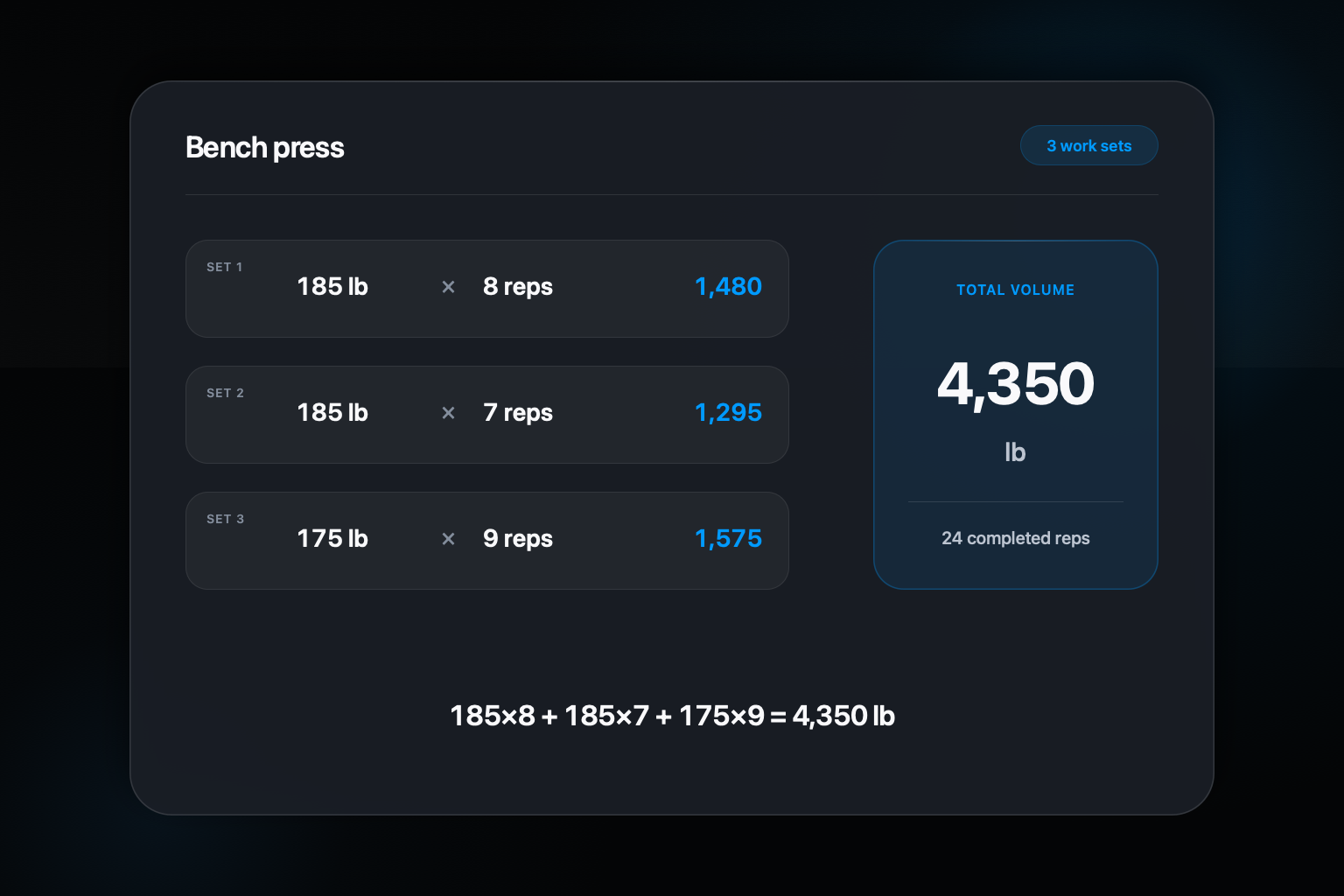
For a weighted exercise, calculate workout volume by multiplying load by completed reps for each set, then adding the set totals. If you bench 185 pounds for 8 reps, 185 for 7, and 175 for 9, the calculation is 185x8 + 185x7 + 175x9 = 4,350 lb of volume for those sets.
That number is sometimes called volume load or tonnage. It is easy to calculate once the sets are recorded correctly, which is why the logging step matters. Volume can help compare similar sessions, but it does not measure technique, range of motion, effort, recovery, or every kind of training stress.
Step by step: a simple way to do it
- 01
Write every work set
Record the actual load and completed reps rather than the planned prescription.
- 02
Multiply load by reps
Calculate a total for each set. For unilateral work, decide whether the entered load represents one side and keep that convention stable.
- 03
Add the set totals
Sum the comparable sets for the exercise or session scope you want to review.
- 04
Compare the same scope
Check the same exercise, units, set types, and similar range of motion before interpreting a change.
Calculate volume set by set
Set-by-set arithmetic handles changing loads cleanly. For the bench example, the first set contributes 1,480 pounds, the second contributes 1,295, and the third contributes 1,575. Adding them produces 4,350. Multiplying an average load by total reps can reach a similar result, but individual sets are easier to audit when something looks wrong.
Bodyweight exercises need a convention. You might track completed reps without a volume load, or use added external load only. Machines may display a selected weight that does not equal force at the handle because their mechanics differ. The number remains useful for comparing the same machine and setup if you label it consistently.
Separate warm-ups when the question requires it
Including warm-up sets is not automatically right or wrong. It depends on what you want the total to represent. If you compare productive work sets, keep warm-ups separate. If you want every loaded repetition performed in the session, include them. A tracker should make the convention clear enough that one week's total is not inflated merely because you logged more warm-ups.
The same rule applies to drop sets, partial reps, assisted reps, and paired movements. Preserve the entry, but do not silently collapse different set types into a comparison that implies they were identical. A short note can prevent a neat total from telling the wrong story.
Use volume for comparisons it can support
Volume is most interpretable when the exercise, range of motion, and set purpose stay reasonably similar. Ten thousand pounds of leg press is not directly better than five thousand pounds of squat, and a larger number on a machine does not translate cleanly to a free-weight movement. Compare a movement with its own history before comparing totals across exercises.
The ACSM's 2026 resistance training guidance treats weekly volume as one variable among several and discusses roughly ten sets per muscle group as a hypertrophy-oriented reference, not a universal volume-load target. Programming depends on goals and the person. A calculated total can describe what happened, but it should not prescribe what you must do next.
Automate the arithmetic after accurate capture
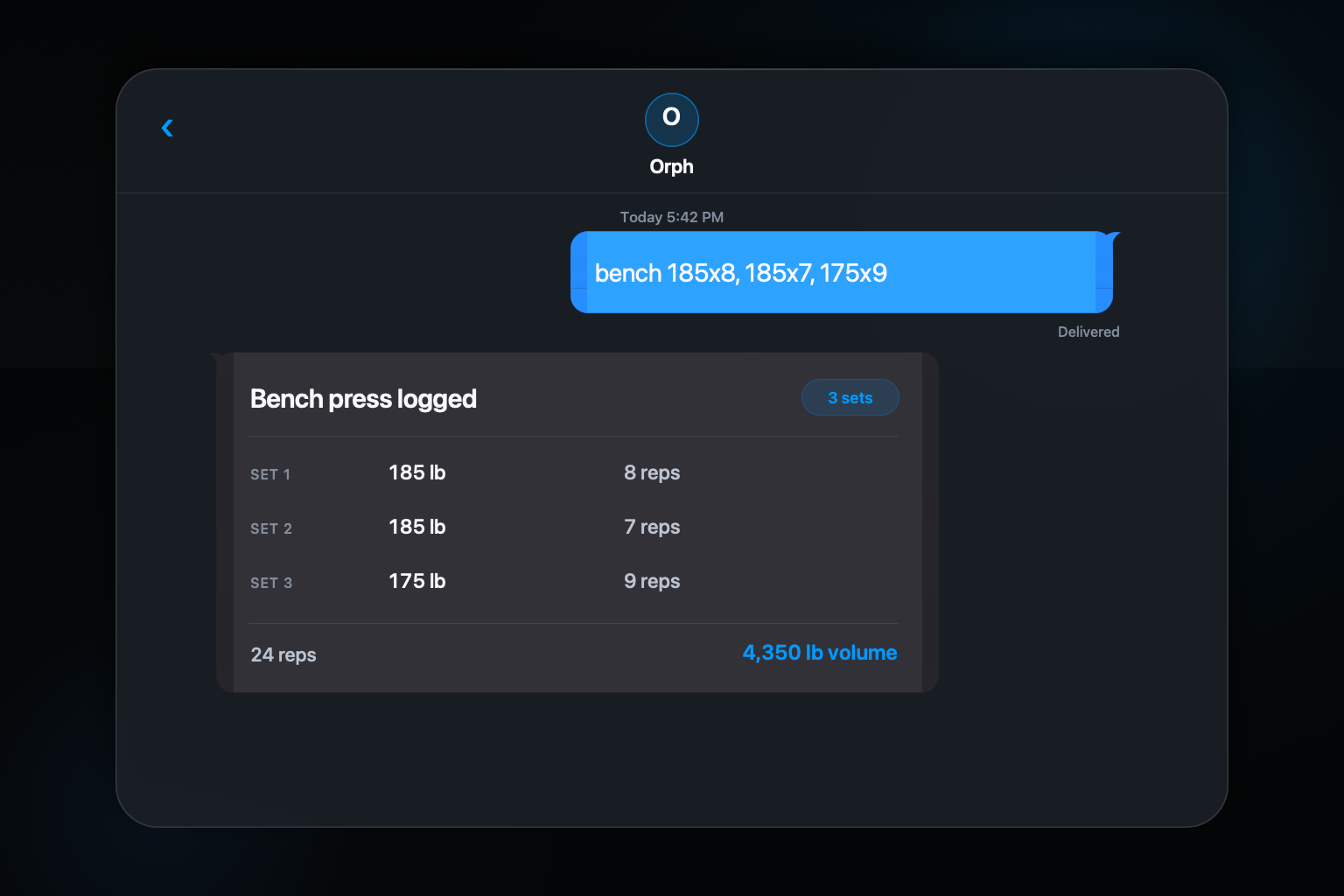
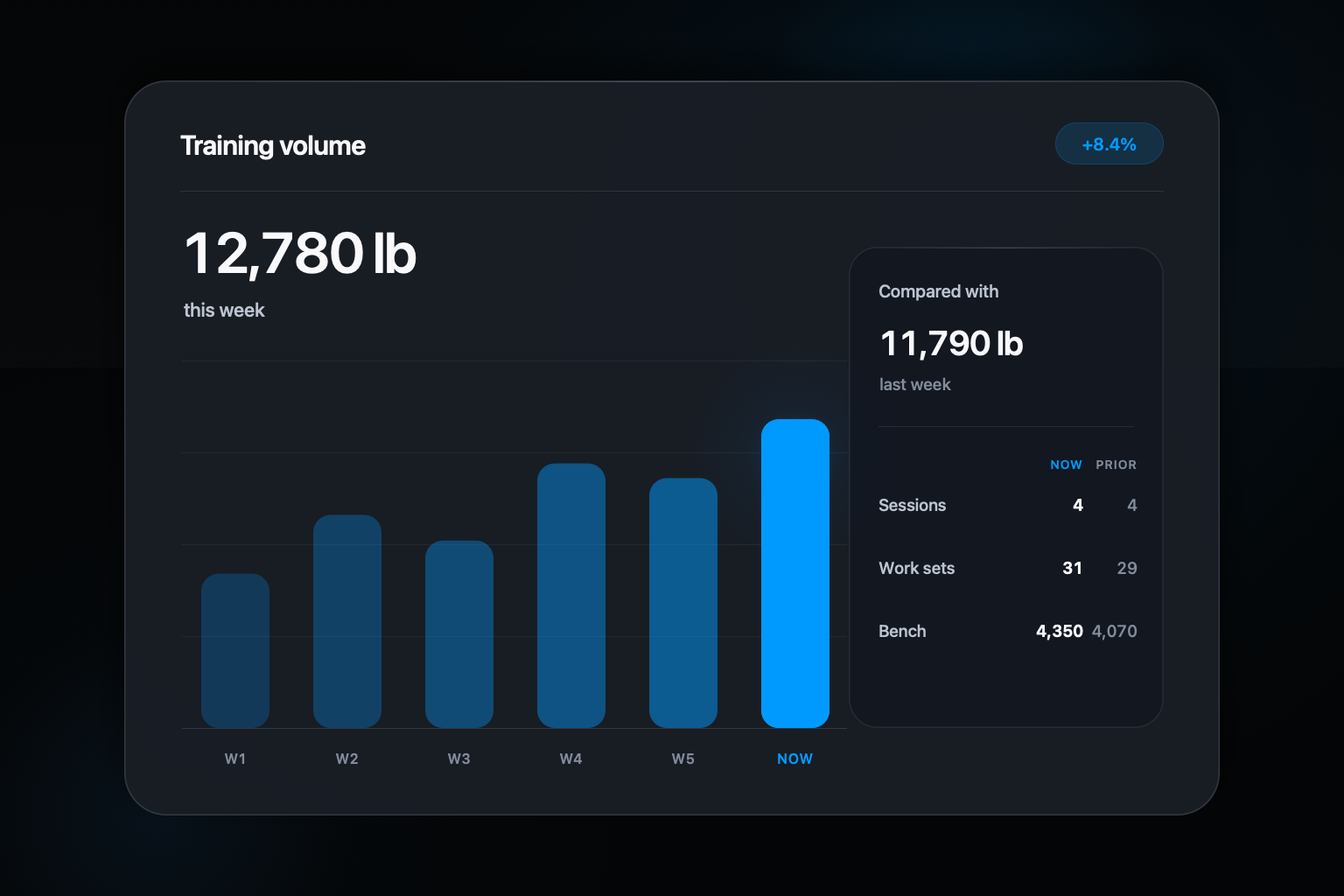
A spreadsheet can multiply and sum sets, but only after the sets reach the sheet. Text logging moves the capture closer to the workout. Orph's current Messages example accepts several sets in one line, structures the result, and can return a volume comparison in the reply.
Always check the confirmation. A transposed load or missed set produces precise but wrong arithmetic. The public site's earlier mockup displayed an incorrect result for the example above; the correct total is 4,350. This rebuild fixes that copy and adds validation around the published example.
Common questions about this approach
Should warm-up sets count toward workout volume?
They can, but keep the convention consistent. Separate warm-ups when you want to compare work-set volume, and include them only when the total is meant to represent every loaded rep.
Does higher workout volume always mean a better workout?
No. Volume does not capture technique, range of motion, effort, exercise choice, or recovery, and totals across different movements are often not directly comparable.
Sources and further reading
Orph product behavior comes from the current site, Privacy Policy, and Terms. General background is supported by: