The short answer
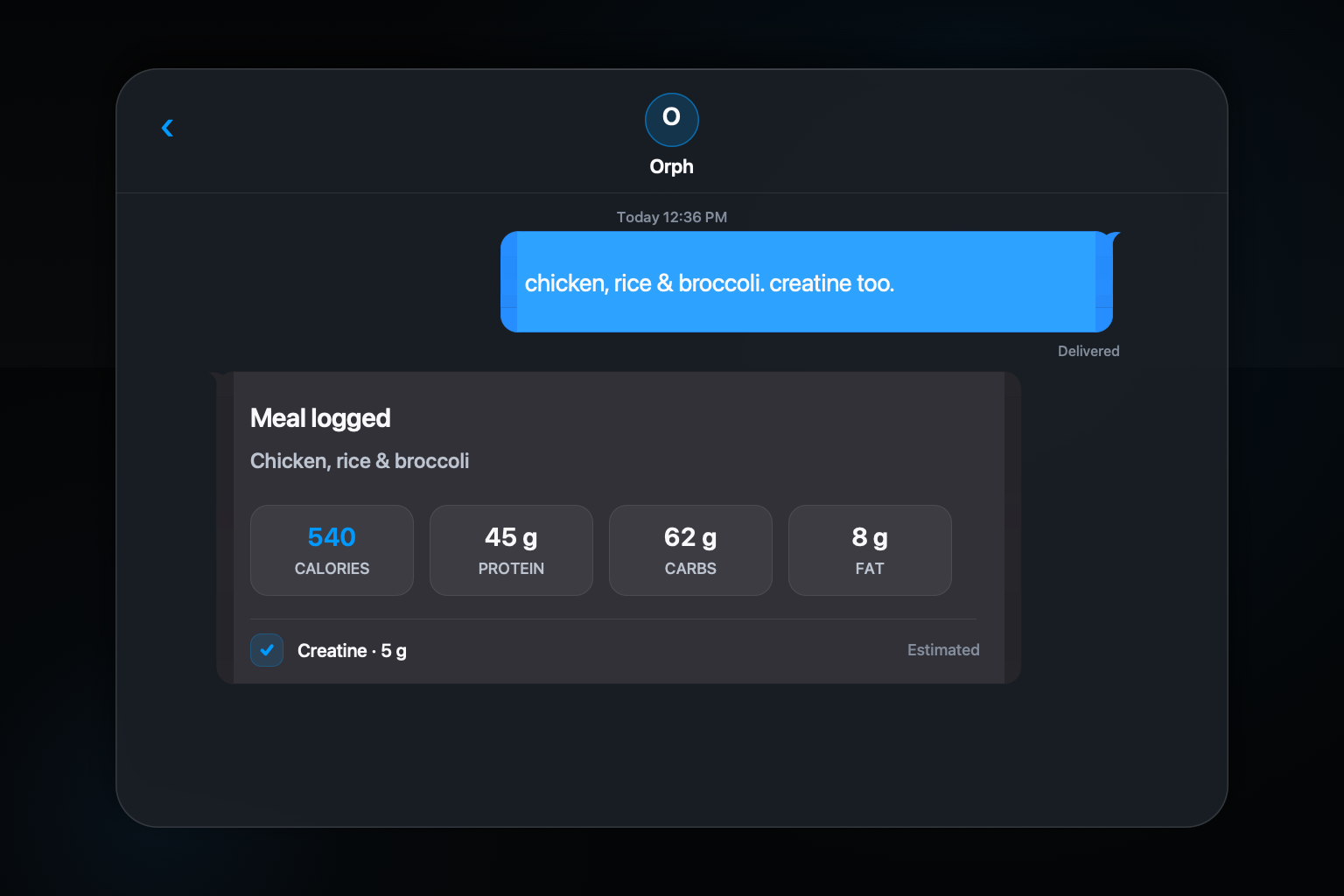
To log a meal by text, describe what you ate, include the portion details you know, and mention preparation choices that change the estimate. Chicken burrito bowl with rice, black beans, guac, and salsa is more useful than lunch. If you know the amount, add it. If you do not, treat the result as an estimate and correct it when needed.
Orph's current product flow is designed to turn that ordinary message into a meal record with estimated calories and macros. The reply is part of the process. It lets you see what was understood and change an ingredient or portion without opening a food database and starting over.
Step by step: a simple way to do it
- 01
Describe the foods
Name the main ingredients or dish in plain language. Include sauces, drinks, and add-ons that are easy to overlook.
- 02
Add a useful portion clue
Use a weight, household measure, package amount, restaurant size, or simple count when you know it.
- 03
Read the estimate
Check the foods, calories, and macros returned by the tracker rather than treating the first result as exact.
- 04
Correct the entry by reply
Send the changed ingredient or amount, such as two eggs instead of three, while the meal is still fresh.
Give the message enough detail to estimate the meal
Food names alone often leave several unanswered questions. Fried chicken and grilled chicken differ. A tablespoon of oil can change a meal more than a handful of leafy vegetables. Restaurant portions vary, and a homemade bowl can contain twice as much rice as another bowl with the same name. You do not need to measure everything, but include the details that obviously affect the result.
Useful portion clues include grams, ounces, cups, tablespoons, package fractions, and counts. A message such as 3 eggs, 2 slices toast, banana, protein shake gives the tracker discrete items. For a mixed dish, name the main components and any calorie-dense additions you remember. Honest uncertainty is better than false precision.
Understand what the estimate can and cannot tell you
Nutrition databases connect a food description and portion to nutrient values. USDA FoodData Central documents that many foods provide values per 100 grams plus separate portion weights, and the portion value is calculated from those quantities. That means the selected food match and assumed portion both affect the result.
Labels and database records also use defined rounding and measurement methods. A precise-looking calorie total is still based on the information available. Use the estimate as a personal tracking record, not a lab measurement, diagnosis, or instruction about what you should eat. Orph's public materials state that its calorie and macro outputs are estimates and are not medical or nutritional advice.
Correct the highest-impact mistake first
When the reply is wrong, start with the ingredient or portion that changes the total most. Correcting two eggs to three, a half cup of rice to two cups, or grilled to fried is more useful than polishing a tiny garnish. A conversational correction keeps the original context visible and makes the repair quick enough to do immediately.
You can also improve future messages by noticing which descriptions are ambiguous. If the tracker repeatedly guesses the wrong kind of protein shake, include the brand-free ingredients or serving size you know. The goal is not to learn a secret command language. It is to give a short description that reliably represents your meal.
Review the day without turning one meal into a verdict
A meal record becomes more useful when it sits beside the rest of the day. Review totals and patterns after enough entries exist, then fix obvious gaps. Missing drinks, cooking oils, snacks, and restaurant extras are common reasons a day looks incomplete. If you missed a meal, add the best honest description you can rather than inventing exact amounts.
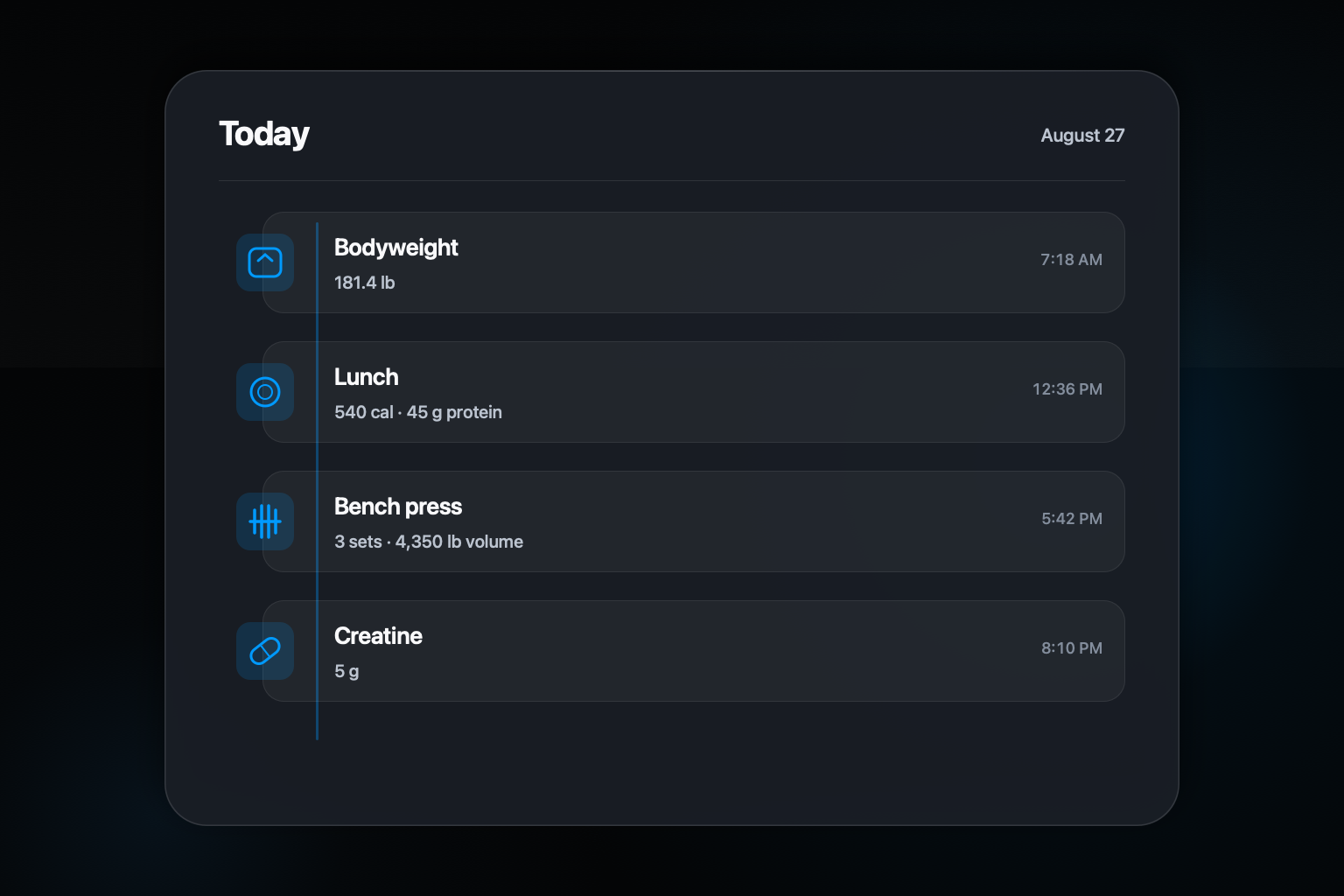
Orph keeps meal logging in the same iMessage thread as workouts, bodyweight, and other supported fitness records. That arrangement can reduce app switching, but it does not make uncertain input certain. Fast capture, visible feedback, and easy correction are the practical advantages.
Common questions about this approach
Can I log a restaurant meal by text?
Yes. Name the restaurant item or describe its main components and size. Treat the returned nutrition as an estimate because preparation and portion sizes can vary.
Are Orph calorie estimates medical advice?
No. Orph is for personal tracking, and its calorie, macro, workout, supplement, and insight outputs are estimates rather than medical, nutrition, or training advice.
Sources and further reading
Orph product behavior comes from the current site, Privacy Policy, and Terms. General background is supported by: